
Tata Consultancy Services (TCS) on Monday said its Rs 18,000 crore share buyback offer will open on March 9 and close on March 23. On February 12, the company announced the share buyback programme entailing 4 crore shares at Rs 4,500 apiece. TCS has fixed April 1, 2022 as the last date for settlement of bids on stock exchanges which may even happen earlier, according to a BSE filing.

From the Sensex pack, HDFC, HDFC Bank, Mahindra & Mahindra, UltraTech Cement, Tata Steel, Bajaj Finance, State Bank of India, Reliance Industries, Bajaj Finserv and ICICI Bank were the major gainers. Power Grid, Maruti, Tech Mahindra, IndusInd Bank, HCL Technologies and Axis Bank were among the laggards.

Benchmark indices ended on a firm note on Friday, extending their previous day's gain, amid continuous foreign fund inflows and a positive trend in the global markets. The 30-share BSE Sensex climbed 104.92 points or 0.18 per cent to settle at 59,793.14. During the day, it jumped 431.58 points or 0.72 per cent to 60,119.80.

From the Sensex pack, Maruti, Axis Bank, Tata Consultancy Services, Nestle, Infosys, Mahindra & Mahindra, Tech Mahindra and Bharti Airtel were the major laggards. Power Grid, Sun Pharma, HCL Technologies, Larsen & Toubro and UltraTech Cement were the gainers.

The National Association of Software Services Companies (Nasscom) on Tuesday launched the Talent Connect portal to bridge the gap between recruiters and digitally skilled and certified candidates. The portal, which has been in the work for the last 28 months has 100,000 candidates and companies such as Tata Consultancy Services (TCS), Tech Mahindra and Salesforce recruiting from it. The platform, for the first time, is also making an attempt to bridge the gap of skill-based talent to employers, rather than the current practice of academic focused talent base.

Among the Sensex firms, Asian Paints, NTPC, Tata Motors, Bharti Airtel, State Bank of India, Larsen & Toubro, Wipro, Tech Mahindra, Tata Consultancy Services, ITC, HDFC Bank and Maruti were the biggest winners. Hindustan Unilever, Infosys, UltraTech Cement, Bajaj Finance, Nestle, Axis Bank, Reliance Industries and HDFC were among the laggards.

Equity benchmarks Sensex and Nifty faced heavy drubbing on Thursday, falling over 1 per cent each, in tandem with weak global markets following the US Federal Reserve's interest rate hike and its hawkish stance. The 30-share BSE Sensex tanked 878.88 points or 1.40 per cent to settle at 61,799.03. During the day, it tumbled 962.3 points or 1.53 per cent to 61,715.61.

Equity benchmarks ended lower on Thursday as a fag-end sell-off wiped out early gains, with IT and bank stocks playing spoilsport amid monthly derivatives expiry. After remaining in the positive territory for most part of the trade, the BSE Sensex suddenly came under selling pressure during the last half-hour of the session, declining 310.71 points or 0.53 per cent to settle at 58,774.72. During the day, it hit a high of 59,484.35 and a low of 58,666.41.

UltraTech Cement was the biggest gainer in the Sensex chart, climbing 3.13 per cent, followed by Kotak Mahindra Bank, Tata Motors, Axis Bank, Maruti, Bajaj Finserv, Bajaj Finance and Mahindra & Mahindra. In contrast, Infosys, Tech Mahindra, Tata Consultancy Services, Wipro, Bharti Airtel, HCL Technologies, ICICI Bank and Nestle were among the laggards.
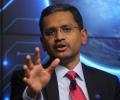
Infosys has emerged as the fastest growing IT services brand following 52 per cent brand value growth since last year and 80 per cent since 2020 to $12.8 billion, earning it third spot, the brand valuation consultancy said in its latest Global 500 IT Services Ranking report. TCS and Infosys have pushed IBM to fourth spot from second. IBM's brand value now stands at $10.6 billion, a decline of 34 per cent from last year and 50 per cent since 2020.

From the Sensex firms, Bajaj Finance, HDFC, HDFC Bank, Bajaj Finserv, Asian Paint, State Bank of India, Tata Consultancy Services, Bharti Airtel, Reliance Industries and Tata Steel were the biggest gainers. HDFC climbed 2.59 per cent after the housing finance major on Thursday reported a 20 per cent growth in standalone net profit to Rs 4,425 crore for the quarter ending March 2023 on the back of higher interest income. IndusInd Bank, Nestle, Power Grid, ITC, Tata Motors and Mahindra & Mahindra were the major laggards.

Seven of the 10 most valued domestic companies witnessed a combined erosion of Rs 1,07,566.64 crore from their market valuation last week, with Reliance Industries accounting for around half of the losses. Last week, the 30-share BSE benchmark Sensex declined 849.74 points or 1.70 per cent. Only Tata Consultancy Services (TCS), Hindustan Unilever Limited and HDFC from the top-10 list saw a rise in their market capitalisation.
Wipro, Power Grid, Larsen & Toubro, Mahindra & Mahindra, Tech Mahindra, NTPC, Titan, Tata Consultancy Services and HCL Technologies were among the other major winners. Bajaj Finance, IndusInd Bank, Asian Paints, Hindustan Unilever, Axis Bank, ICICI Bank, Reliance Industries and HDFC Bank were among the laggards.

IT major Wipro on Thursday reported a marginal year-on-year decline of 0.4 per cent in net profit to Rs 3,074.5 crore for the fourth quarter ended March 2023 and announced a share buyback of up to Rs 12,000 crore. The Wipro board approved the buyback of 26.96 crore equity shares at a price of Rs 445 apiece. "Board...of Wipro...has approved a proposal to buyback up to 26,96,62,921 equity shares, being 4.91 per cent of the total paid-up equity shares of the company, for an aggregate amount not exceeding Rs 120,00,00,00,000 at a price of Rs 445...per equity share," the company said a regulatory filing.

'There will be 200 ITIs developed as hubs, while 800 will be developed as spoke, connected with five National Skill Training Institutes.'

The early-bird results for the April-June quarter of 2024 (Q1FY25) hint at a slowdown in corporate revenues and profits in FY25. Corporate profits might face headwinds from a continued revenue growth slowdown and a reversal in margin gains from lower commodity and energy prices in FY24. The combined net profit (adjusted for exceptional gains and losses) of the 210 companies that have declared their Q1FY25 results so far is down 4.2 per cent from the year-ago period - their worst showing in seven quarters.

Tatas' best bet would be to find an insider who understands the systems, say headhunters

While about 8,000 people are in the long list of invitees, the select list features 506 A-listers, including prominent politicians, leading industrialists, top film stars, sportspersons, diplomats, judges and high priests.
Tata Consultancy Services (TCS), India's largest IT services firm, is planning to increase salaries by an average of 7-8 per cent for its offsite employees and 2-4 per cent for its onsite staffers in 2024-25. High performers can expect a raise of 12-15 per cent. The company, which had a headcount of 603,305 as of December 31, 2023, will be closely looking at the promotions and the process may also get pushed to the first quarter of FY25, revealed a source on condition of anonymity, because he is not authorised to speak to the media.

From the Sensex pack, ITC jumped 4.74 per cent. The other major gainers were IndusInd Bank, Hindustan Unilever, Infosys, Wipro, HCL Technologies, Tata Consultancy Services and ICICI Bank. HDFC, Tata Steel, Bajaj Finance, NTPC, Power Grid and HDFC Bank were the major laggards.

Among the Sensex firms, Tech Mahindra, Wipro, Infosys, Tata Consultancy Services, HCL Technologies, Larsen & Toubro, ITC, Sun Pharma, NTPC and Titan were the major gainers. Nestle, Axis Bank, Tata Motors, ICICI Bank, HDFC Bank and Bharti Airtel were the laggards.
Bajaj Finserv was the biggest gainer in the Sensex pack, rising 2.21 per cent, followed by Titan, ITC, Kotak Mahindra Bank, HDFC Bank, HDFC, Bajaj Finance, IndusInd Bank, ICICI Bank, HUL, Reliance Industries and Mahindra & Mahindra. Wipro, Tata Consultancy Services, Power Grid and Tech Mahindra were the laggards.
From the Sensex pack, Mahindra & Mahindra, UltraTech Cement, Power Grid, State Bank of India, ITC, Titan, Tata Motors and ICICI Bank were among the major winners. Tata Consultancy Services, Bajaj Finance, Tech Mahindra, Asian Paints and HDFC were among the major laggards.

Wipro was the biggest loser in the Sensex pack, slipping nearly 2 per cent, followed by IndusInd Bank, State Bank of India, Kotak Mahindra Bank, ICICI Bank, HDFC Bank, Infosys, Tata Consultancy Services, HDFC and Bajaj Finserv. On the other hand, Nestle, Mahindra & Mahindra, ITC, HCL Technologies, Asian Paints and Maruti were among the gainers.

Analyst are cautious about the performance of IT services sector from January to March quarter (Q4) of FY24 and the first half (H1) of FY25. While the Bloomberg consensus on revenue implies the market is expecting 2-3 per cent growth on a quarter-on-quarter (Q-o-Q) basis for the IT majors through FY25, the H1FY25 is likely to see even flatter returns, and Q4FY24 is likely to be poor. There is likely to be some recovery in the second half (H2FY25) but even so, there's a chance that the market will be overall disappointed.

Investors' wealth climbed Rs 3.20 lakh crore as markets staged a smart comeback on Wednesday after falling in the last eight trading sessions. The BSE Sensex rallied 448.96 points or 0.76 per cent to settle at 59,411.08. During the day, it jumped 513.33 points or 0.87 per cent to 59,475.45.

As many as 86 per cent of senior business executives have deployed artificial intelligence (AI) to enhance revenue streams or create new ones, said a report by Tata Consultancy Services (TCS) on Wednesday. As many as 69 per cent of businesses are more focused on using AI for innovation and increasing revenue than on improving productivity and optimising cost, said the 'TCS AI for Business Study'.

Benchmark indices Sensex and Nifty took a beating on Thursday and dropped over 1 per cent each, weighed by selling in index major Reliance Industries, IT and banking stocks amid weak global trends. The BSE Sensex fell 770.48 points or 1.29 per cent to settle at 58,766.59. During the day, it tanked 1,014.5 points or 1.70 per cent to 58,522.57. Similarly, the NSE Nifty declined 216.50 points or 1.22 per cent to close at 17,542.80.
IT major TCS CEO Rajesh Gopinathan has reigned, and the company nominated its global head of the BFSI division K Krithivasan as the CEO Designate with immediate effect, the firm said on Thursday. Gopinathan will continue with the company till September 15, 2023, to provide transition and support to his successor.

Billionaire Mukesh Ambani's Reliance Industries Ltd climbed eight spots to the 45th rank, the highest for an Indian company on Forbes' latest Global 2000 list of public companies worldwide.
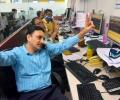
From the Sensex pack, NTPC, Bajaj Finance, IndusInd Bank, UltraTech Cement, Bajaj Finserv, State Bank of India, Tata Motors, ITC, Power Grid and Larsen & Toubro were the biggest gainers. IndusInd Bank climbed 2 per cent after the company on Tuesday reported a 30 per cent jump in consolidated net profit in April-June quarter at Rs 2,124.50 crore, helped by core income growth and lower bad loan provisions.

Certain changes in the past two or three years could have a long-term structural impact on the IT services market.

"Humble", "kind", and "spiritual" are some adjectives used to describe K Krithivasan, chief executive officer designate and global head of banking, financial services, and insurance business, Tata Consultancy Services (TCS), where he is an old stager. Krithivasan, based out of Chennai, has been part of the global technology sector for over 34 years. He joined TCS in 1989. During his long tenure at the company, he has held leadership roles in delivery, customer relationship management, large programme management, and sales.

Take the Rediff Business Quiz and find what you know about TCS, India's largest IT company.
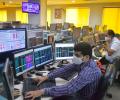
Equity benchmarks eked out marginal gains to settle in the positive zone after swinging between gains and losses during the session on Wednesday amid weakness in global bourses. In a trade marked with highs and lows, the 30-share BSE Sensex climbed 54.13 points or 0.09 per cent to settle at 59,085.43. During the day, it hit a high of 59,170.87 and a low of 58,760.09. Similarly, the broader NSE Nifty went up by 27.45 points or 0.16 per cent to 17,604.95.
Equity investors became richer by Rs 5.66 lakh crore as markets bounced back sharply on Tuesday following a recovery in global equities. The 30-share BSE Sensex jumped 1,276.66 points or 2.25 per cent to settle at 58,065.47 points. During the day, it zoomed 1,311.13 points or 2.30 per cent to 58,099.94 points. The market capitalisation of BSE-listed firms climbed Rs 566,318.84 crore to Rs 273,92,739.78 crore.
From the Sensex pack, Power Grid, Infosys, Asian Paints, Mahindra & Mahindra, HCL Technologies, IndusInd Bank, Tech Mahindra, Bajaj Finance, Wipro, Tata Consultancy Services, HDFC Bank and Titan were the major gainers. Tata Steel and Bharti Airtel were the laggards.
Benchmark BSE Sensex and Nifty snapped their two-day losing streak to close nearly half a per cent higher on Tuesday following gains in banking, metal and auto stocks. The 30-share BSE Sensex climbed 257.43 points or 0.44 per cent to settle at 59,031.30. During the day, it hit a high of 59,199.11 and a low of 58,172.48.

The branding exercise is estimated cost Rs 100-200 crore to the Tata Group.

Tata Group, which will now include Air India, Vistara, and Air Asia, has the highest market share of departures on the top 10 routes in the country. According to the data from Caladrius Aero Consulting, which tracked the departure data for eight airlines in August and September, Tata Group is ahead on all the top 10 routes ranked in accordance with the number of departures in August-September 2021. On the top 100 routes in terms of departures, Tata Group is ahead of its chief rival IndiGo on 30 of them.
